


Founder & Principal, Divergent Kind

I design how work adapts
to the people inside it.

I’ve created original methods for this moment with AI. They let a system understand how each person notices, decides and contributes, adapt the work around them, and learn whether it helped. Coherence OS is one product built on them.

Grounded in more than a decade of product and service design with

AppleJetstarNational Australia BankInnovation labQantasAustradeVirgin AustraliaNCS
  • 98%Jetstar online check-in success after launch, from 90% failing
  • A$1.5Ma month off Jetstar’s operating costs in the first six months
  • 15designers hired to build Virgin Australia’s in-house design team

01 / Original methods

I created these methods
for this moment with AI.

They come from Consciousness-Centred Design, the approach I developed at Divergent Kind. It starts with differences in how people attend, make meaning, decide and contribute, and shapes the system around them rather than the other way round. Coherence OS is one product built on them.

  1. ApproachConsciousness-Centred Design
  2. MethodsAwareness Constellation, Dynamic Transposition, Qualitative Coherence Indicators
  3. ProductCoherence OSFor organisations · in development

Understand the person.

Awareness Constellation · context the person owns

A revisable understanding of how someone notices, makes meaning, contributes and relates to others, owned by them. It informs what a system offers them. It never decides who they are.

How it informs the system

A map of how someone prefers to receive information, decide and contribute, owned by them and changeable at any time. Anything inferred stays explainable and correctable.

Only the context a task needs travels with it, and only with permission. Adaptation goes beyond job titles and display preferences.
Adapt the experience.

Dynamic Transposition · same facts, different delivery

Changes how communication, timing, interaction and workflow reach each person. Meaning, facts, permissions and who decides stay the same.

What can change

A handoff can arrive complete, a decision can wait until its owner has the context, or a sequence of work can change to make participation easier.

Agent-to-agent coordination handles preparation within agreed boundaries. The experience and surrounding conditions adapt; the person retains choice and control.

Learn whether it helped.

Qualitative Coherence Indicators · conditions, not just output

Compares what an organisation says, what people experience and what the work shows, across agency, reciprocity, alignment and signal integrity. A baseline first, then a re-measure alongside the organisation’s own measures.

What it measures

Whether people can act on what they own, whether effort flows both ways, whether actions match what the organisation says matters, and whether information reaches the person who needs it.

Compare baseline and repeat measures alongside decision latency, rework, handoff quality and relevant business outcomes. This connects changes in conditions with what happens in practice.

The methods are proprietary to Divergent Kind and still developing through research and client work. What they look at is published here; how they infer and score is held. More at divergentkind.com.au (opens in a new tab).

02 / Coherence OS

An AI product built on these methods · in development at Divergent Kind

When should an agent
step in?

Coherence OS applies the methods to a whole organisation. It is designed to see how work moves through a team and step in when a decision is about to go wrong. Spotting the problem is the easy part. The hard part is the behaviour: who the agent speaks to, when, with what evidence, what it may do without a person, and what it learns from.

  1. Speak to the person who can fix it, privately.A public correction makes people defensive. A private note to the Sales lead gets the request rerouted, and nobody else sees the alert.
  2. Step in at the moment it matters.When a request skips Product, before the build starts, not after the rework. Never into someone’s focus time without a stated reason.
  3. Show the evidence.The three signals behind the alert are one click away, so the person can check it rather than take it on trust.
  4. Do the legwork, leave the decision.The agent finds a time all three are free, drafts the agenda and attaches the context. A person sends the invite, and Product keeps the scope call.
  5. Learn only from what holds.The outcome is logged against the pattern. It counts as progress when the change holds, not when one meeting happens.
Slack Illustrative scenario · sample data

#delivery

Slack · 9 members · Engineering

MiaSales lead

@Sam can we get the export feature into today’s build? I’ve told the customer it’s coming.

Coherence OSApp

Only visible to you, Mia

Route this through Product first.

This feature request went straight to Engineering. Product decides scope before anything joins a build, and there’s no scope decision for it yet.

See the three signals

Sales · This message“Can we get the export feature into today’s build?”

Product · Decision recordNo scope decision recorded for the export feature.

Engineering · Build planBuild starts at 16:00. This feature can be held separately.

First time all three are free before the 16:00 build. Priya’s focus time ends at 14:00.

Staged invite · agenda pre-filled

25-minute scope decision, today 14:30.

Calendars checked · today 13:00–16:00

Invited

  • Priya, Product ownerDecides the scope
  • Sam, Engineering leadOwns the build
  • Mia, Sales lead (you)Made the commitment

Agenda

  1. 5 minWhat we committed to the customer · Mia
  2. 10 minScope decision · Priya
  3. 10 minBuild plan and owner · Sam

Attached: the customer commitment, the account history and the two earlier requests. Nobody needs to prepare.

Nothing is sent until you choose Send invite. No one else sees this alert.

  1. 01 Catch it in Slack
  2. 02 Land it in calendars
  3. 03 See the Context Graph

Coherence OS catches a decision bypass in Slack, stages the fix in Google Calendar, and shows where it sits in the Context Graph of the whole organisation. A sample organisation with sample data; no messages or invites are sent.
How it measures whether it helped

Conditions. Can people act on what they own? Does effort flow both ways between teams? Do actions match what the organisation says matters? Does information reach the person who needs it?

Observable change. A baseline at the start, re-measured at day 90, alongside decision latency, rework, decision closure and handoff quality.

This example uses a sample organisation and sample data to show the product’s interaction and measurement design. It does not report measured client improvements.

Explore Coherence OS (opens in a new tab)

Applied inside a technology scale-up

Research at scale.
Interventions in the work.

I designed the research and synthesised interviews, survey data and operating evidence into a measured baseline of how the organisation actually worked. AI scaled the synthesis at machine speed.

I configured live signal sensing and designed the intervention logic for email, calendar invitations and Slack, including routing, decision ownership and human review.

Field research and baseline

31%Coherence baseline · QCI
13functions
64survey responses

A design rule from the engagement

Briefings surface only the items that need strategic judgement. Conflicting directions wait for their owners to resolve them.

Explore the implementation

What I created

A research context and measured baseline; briefing and decision-record structures; classification, routing and recipient-aware behaviour for an existing client agent.

What ran

Original method structures were incorporated into the client’s agent. Separate sensing ran against live work signals for seven weeks.

What a decision retained

Its source, owner, rationale, displaced work and review point. Future requests could be understood against existing commitments.

Measurement to date

The engagement established a baseline of 31% coherence on the Qualitative Coherence Indicators: whether people can act on what they own, whether effort flows both ways, whether actions match intent and whether information arrives intact, read from interviews across 13 functions, an all-staff survey and seven weeks of work signals, synthesised into a register of friction points and the patterns behind them. The interview and survey readings agreed. The complete adaptive circuit and its longitudinal effect on business outcomes remain the next stage of the work.

De-identified client case. Research figures describe scope; the baseline is the engagement’s own measurement, not a claim of improvement. The client supplied the underlying agent environment; my contribution connected the original methods, synthesis and behaviour architecture.

03 / Product and service design

Products, services and the teams that build them.

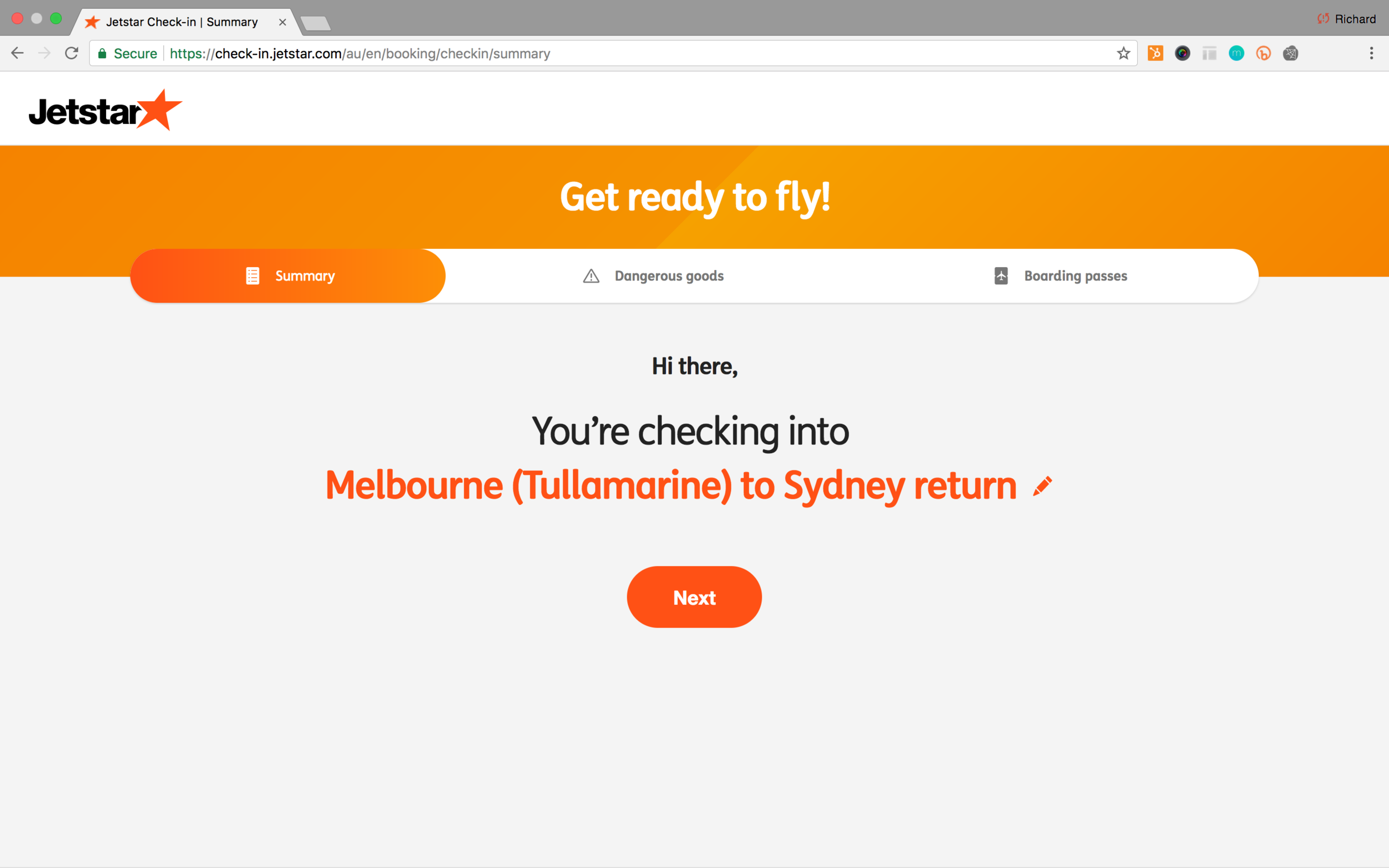
Research, service design, UX & productResponsive web check-in
Richard’s redesigned Jetstar check-in: Summary, Dangerous goods and Boarding passes, with one primary Next button.
Redesigned journey: three visible steps, an editable trip summary and one primary action.

Make a complex journey easier to use.

Nine in ten of Jetstar’s online check-ins were failing. Each one landed at the airport as a manual check-in: more staff, delayed flights and millions in cost. Worst of all was what it did to customers. I took the UX design end to end: research, service mapping, prototypes, usability testing and delivery to development. My design took check-in from 14+ steps to the three that were built.

  • 98%online check-in success, from a 90% failure rate
  • A$1.5Ma month off operating costs in the first six months
See case study (opens in a new tab)
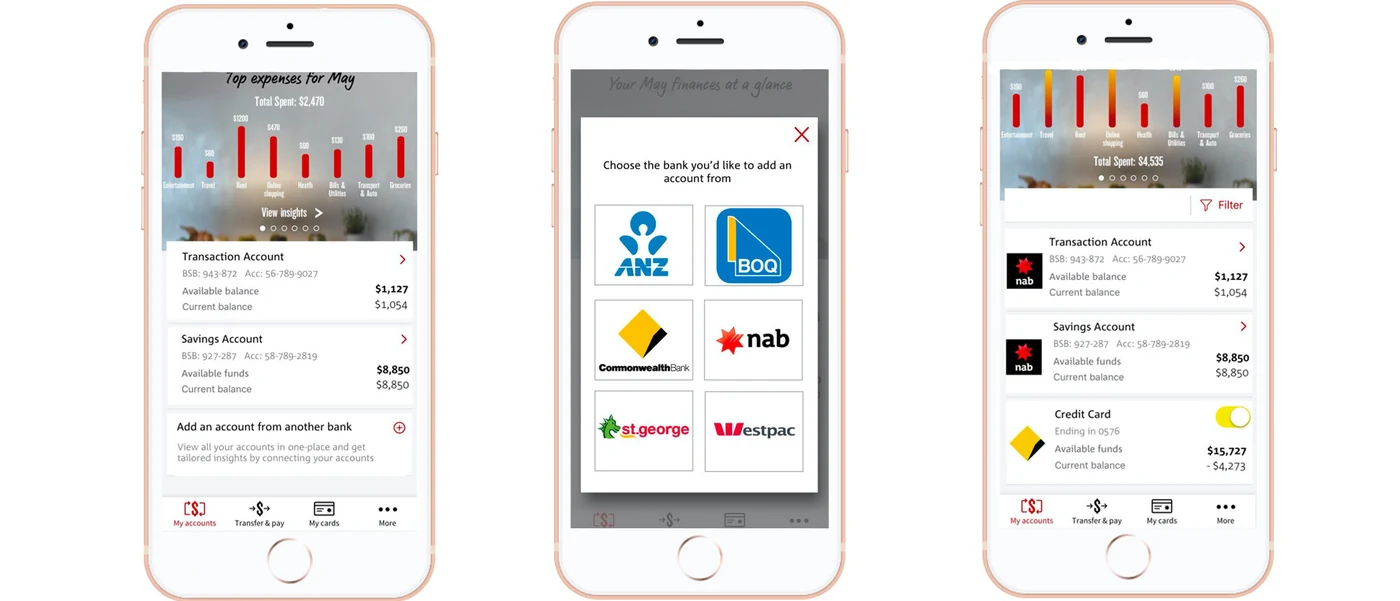
Innovation labOpen-banking prototype
Three NAB open-banking prototype screens showing finances, adding another bank and connected accounts.

Give new technology a human purpose.

Conducted multiple end-to-end innovation design sprints, from research and ideation to prototyping and testing, using human-centred design and design thinking. One prototype, built ahead of Australia’s open-banking legislation, explored smarter uses of people’s banking data: tracking subscriptions and understanding spending and mortgages, well before these were common.

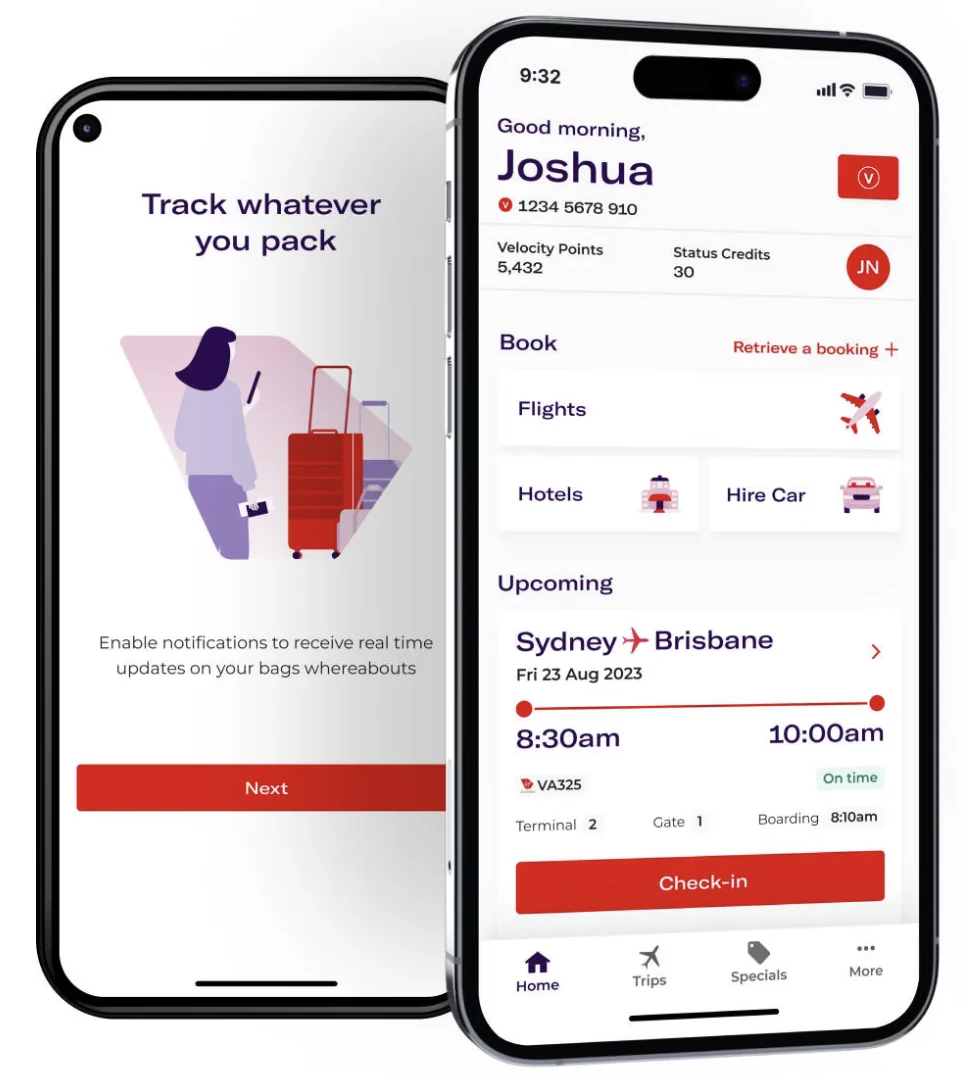
Experience Design Manager, 2020–23Travel and loyalty app
Virgin Australia mobile app screens for baggage tracking, upcoming flights and Velocity membership.

Build the conditions for good design.

Built Virgin’s in-house product design team almost from scratch, hiring 15 designers and leading 20+ people including vendors. Brought conversion expertise in-house by headhunting a CRO product design specialist. The conversion programme that followed added A$100M to ticketing revenue. Set the experience strategy with executive leadership, and put in place the research ops, design ops and shared standards the team delivered through. It had the lowest turnover in Digital.

04 / About

Richard Lipp, founder of Divergent Kind.

Richard Lipp

Founder & Principal, Divergent Kind

I’ve spent more than a decade studying people and turning that understanding into products, services and ways of working. Every job started the same way: work out who decides, who gets told and what never gets said, then change the work to fit.

My strength is observation, grounded in research: thousands of user interviews and survey responses, design sprints and continuous iteration. I built on that foundation to create Consciousness-Centred Design for the age of AI, informed also by my own experience of neurodivergence. From it came methods for adapting how a system communicates with each person, and for measuring whether working conditions improve. Coherence OS, which I’m developing now, applies them to organisations.

Photography and sound are where I practise observation outside work: making something felt but unseen available to others. The thread through all of it is simple: make hidden conditions visible, preserve human agency, and stay accountable for whether the work helps.

Coherence OS · 25-second walkthrough

Silent walkthrough: in Slack, Coherence OS catches a Sales request sent straight to Engineering and alerts the Sales lead, privately, with an invite already staged: a mutual time, Product and Engineering, and a pre-filled agenda. One click sends it, and it lands in all three Google Calendars. The Context Graph then shows the QCI baseline, where coherence breaks across the organisation, and the interventions running on each seam. The interactive example above contains the same information.